
Most Common Symptoms of Abdominal Wall Hernias.

There are many different types of hernias. The most common are those hernias that occur in the groin (inguinal hernias) and in the belly button (umbilical hernias).

What are the symptoms of Inguinal Hernia ?

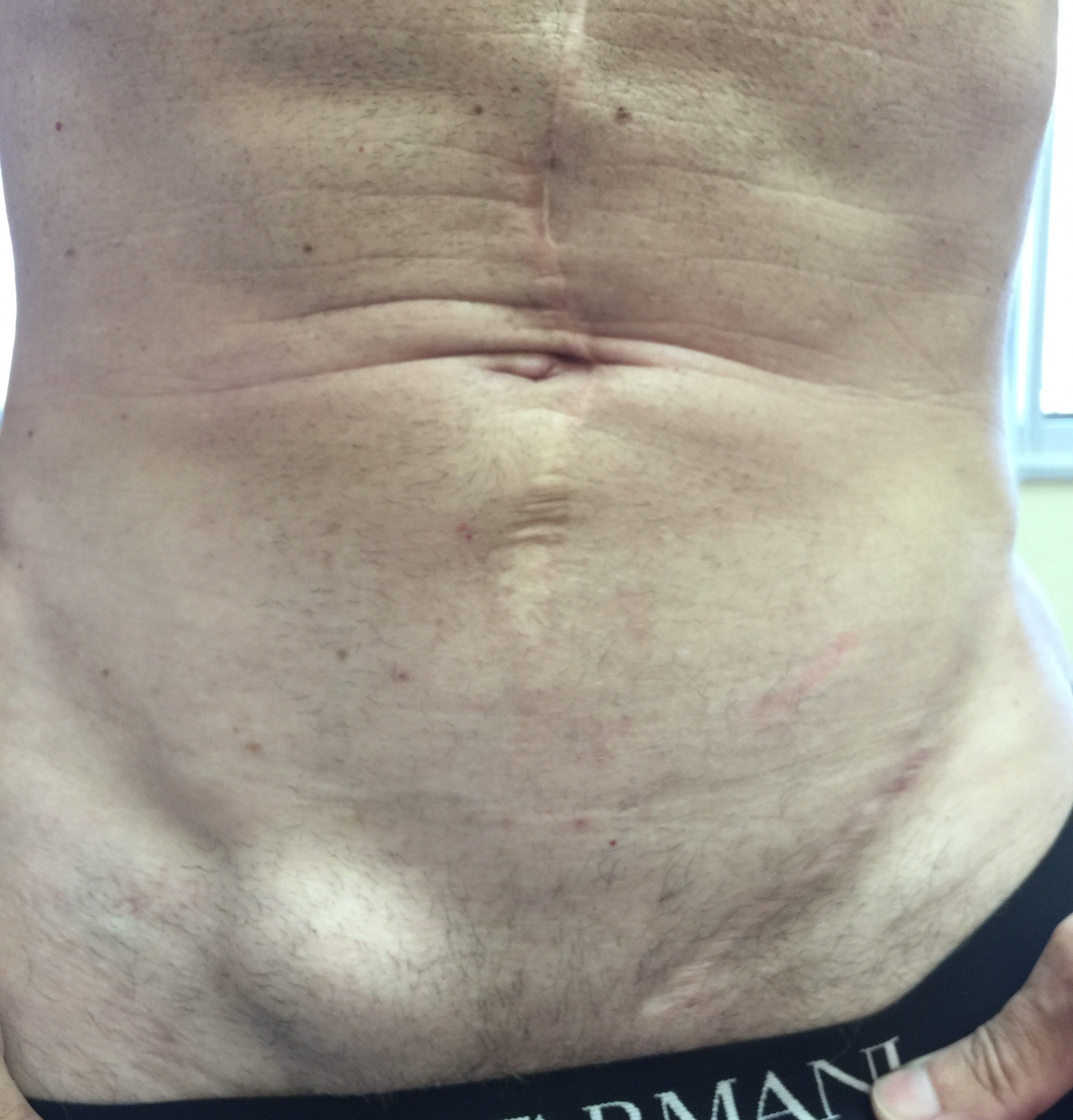
  • A bulge to the right or left of your pubic bone.
    • The bulge enlarges with prolonged standing or exertion.
    • The bulge flattens or becomes absent when lying flat on your back.
  • Pain or discomfort in the area of the bulge.
    • Typically a burning or stabbing sensation.
    • Many inguinal hernias are painless.
    • Pain worsens with activity, lifting or prolonged sitting or standing.
  • Pain or discomfort radiating toward or directly within the testicle.
  • Abdominal bloating or discomfort after eating.
Inguinal Hernia Image

Interesting Facts About Hernias:

  • Hernias of the abdominal wall are a common problem and occur in 4% of adults older than 45 years old.
  • More than 20 million people in the world have a hernia repair annually.
  • More than 1 million abdominal wall hernia repairs are performed each year in the United States.
  • More than 750,000 people undergo Inguinal hernia repair in the United States on an annual basis.
  • 10% of all people will develop a hernia some time in their life.

Percentages of Hernia Types:

  • 75% Inguinal (including femoral)
  • 15% Umbilical
  • 10% Incisional including primary ventral hernias.

Two Factors that can Result in an Increase in Hernia Occurrences

Age

The prevalence of all varieties of hernias increases with age.

Sex

Approximately 25% of males and 2% of females have an inguinal hernia over the course of their lifetime Femoral hernias (though rare overall) occur more frequently in women because of the differences in the pelvic anatomy (female-to-male ratio, 1.8:1). Umbilical hernias are equally common in male and female children but are 3 times more frequent in female adults than in male adults (overall female-to-male ratio, 1.7:1).

Risks of Not Treating Common Symptoms or Pain Related to Hernias

If your hernia is getting larger or becoming more uncomfortable, it may be time to have it repaired. Increasing size of the hernia can potentially make the future hernia repair more complicated and possibly increase the risk of recurrence of the hernia in the future. Increasing episodes of discomfort and increasing severity of pain associated with the hernia may portend a higher risk of imminent incarceration and strangulation of the hernia contents.

Incarceration is when the contents of the hernia become stuck in the hernia opening, This can cause severe pain or even obstruction of the intestine if this is involved in the hernia.

Strangulation is uncommon, but is a potential consequence of prolonged incarceration. It is when the blood supply og the hernia contents becomes compromised by the degree of it being squeezed by the hernia opening. This ultimately can be a serious emergency because the strangulated tissue can infarct (die) causing severe inflammation and infection. Outcomes from emergency surgery are often not as optimal as an elective repair.

Why Choose Center for Hernia Repair

Dr. Yunis and the team at Center for Hernia Repair care about your treatment and want you to receive the results you desire. We specialize in the treatment of hernias and prioritize your comfort and satisfaction.

Contact us today if you have any questions or concerns regarding your hernia situation. Initial appointments can be in-person or vitual. We'll assess your situation and answer your questions about diagnosis, repair options and process, and recover.

Frequently Asked Questions About Abdominal Wall Hernias


What are the most common symptoms of an abdominal wall hernia?

Common symptoms include a visible bulge in the abdomen or groin, discomfort or pain that worsens with lifting or standing, bloating after meals, and in some cases, burning or stabbing pain. Some hernias cause little or no pain, while others may progress and become more uncomfortable over time.

How do I know if I have an inguinal hernia?

Typical signs of an inguinal hernia include a bulge near the pubic bone, discomfort that worsens with activity, pain radiating to the testicle, and a bulge that becomes more noticeable when standing but flattens when lying down. Some inguinal hernias are painless and only visible as a lump.

What are the symptoms of an umbilical hernia?

An umbilical hernia appears as a bulge at or near the belly button. It may increase in size when coughing, straining, or standing, and can cause discomfort, especially after eating or with physical activity.

Can a hernia be painless?

Yes. Many inguinal and abdominal wall hernias are painless at first. Even if you don’t feel discomfort, a visible or recurring bulge in the abdomen or groin may indicate a hernia that should be evaluated by a doctor.

What happens if a hernia is left untreated?

Untreated hernias can increase in size, cause worsening pain, or lead to serious complications. These include incarceration (when tissue gets trapped in the hernia opening) and strangulation (when blood supply is cut off), which can result in severe infection and require emergency surgery.

When should I see a doctor about a hernia?

You should seek medical care if you notice a bulge in your abdomen or groin, if pain worsens with activity, or if you experience sudden severe pain, nausea, vomiting, or inability to pass gas or stool. These could signal an incarcerated or strangulated hernia, which is a medical emergency.

Who is at higher risk of developing a hernia?

Risk factors include age (hernia rates increase with age), sex (inguinal hernias are more common in men, while femoral and umbilical hernias are more common in women), previous abdominal surgery, obesity, and chronic coughing or heavy lifting.

How common are abdominal wall hernias?

Hernias are very common. About 10% of people will develop one in their lifetime. Inguinal hernias account for about 75% of cases, umbilical hernias about 15%, and incisional or ventral hernias about 10%. In the U.S., over 1 million abdominal wall hernia repairs are performed each year.

Can a hernia go away on its own?

No. Hernias do not heal without surgery. While some small hernias may remain stable for a time, they often enlarge or become more painful over time. Surgery is the only way to repair a hernia.

Why choose the Center for Hernia Repair?

At the Center for Hernia Repair, Dr. Yunis and the team specialize exclusively in hernia diagnosis and treatment. They prioritize patient comfort, use advanced surgical techniques, and deliver personalized care to ensure the best outcomes for every patient.

Join Our Newsletter

* indicates required

Center for Hernia Repair

1435 South Osprey Avenue
Suite 201
Sarasota, Florida 34239
941.953.5917
CONTACT USPATIENT PORTAL
© 2024 – 2026 Center for Hernia Repair All Rights Reserved
 Website design by SunCoast Web Studio 
SiteLock menu-circlecross-circlechevron-down-circle
linkedin facebook pinterest youtube rss twitter instagram facebook-blank rss-blank linkedin-blank pinterest youtube twitter instagram